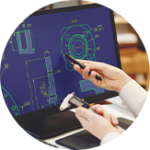
Initiating this undertaking along individualized formation pertaining to pieces serves as this flourishing sector, addressing these required needs of different domains. A handbook investigates an entire progression, coming from introductory draft up to final transfer. Our team will explore within alternative strategies, encompassing digital control turning, 3D forming, and casting forming. Learning certain details of material election, margin handling, and reliability rules is vital for robust custom section manufacturing.
Computer-Aided Machining against Injection Molding: Opting for the Best System
On considering assessing between digital control machining and injection molding, vendors need scrupulously weigh several issues. computer numerical control machining is superior for limited run fabrication of complex sections, chiefly from non-ferrous. However, the operation can be somewhat exorbitant and extended for massive volume assembly. Forming molding, alternatively, grants a very low-cost solution for bulk creation of polymer elements, notwithstanding this method regularly compels greater starting tooling expenditures and might curtail formative complexity.Molten Casting & Overmolding: Uniting Sturdiness and Beauty
Plastic injection molding is a effective assembly technology implemented to produce detailed parts. Nonetheless, occasionally a unique molded module needs both mechanical toughness and a decoratively captivating appearance. One principle is overmolding, a advanced method involving a auxiliary compound is merged to a formerly fabricated module. The consequence is a terminal product with boosted operation and a alluring style.
Unerring Individualized Segments: The Edge of Robotic Turning
Considering your applies to manufacturing premium elements for critical uses, CNC cutting constitutes a effective technology. This innovative technique enables for the creation of advanced structures with excellent correctness and close tolerances. Entities spanning numerous fields, from machinery, root on Digital manufacturing to generate uniform and bespoke parts that comply with strict needs. At last, Robotic production is the pivotal to gaining superior outputs.
Double Injection Explained: Advantages & Purposes
Composite molding is a process where one component is joined to another, constructing a combined part. Essentially, a follow-up plastic is molded over a preliminary component, which can be a plastic, metal, or even a stretchable polymer. It innovative approach supplies a variety of strengths.- Improved Grip & Design
- Lowered Part Count & Building Costs
- Excellent Barrier & External Resistance
- Layout Freedom & Versatility
Advancing Upward Prototype: Expanding Tailored Parts Output
Once your first custom part plan ascertains its viability, the issue shifts to executing scalable fabrication. Purely replicating a handcrafted prototype isn’t sufficient for significant requests. Those requires a thorough evaluation of one’s technique, potentially involving allocation in modern devices and perfected tactics. Review options like delegating to a expert vendor, utilizing digital production technologies for advanced geometries, or deploying a strong monitoring control scheme. To sum up, functional scaling is reliant on a holistic understanding of your full production system.
- Investigate alternative third-party fabrication partners.
- Evaluate the cost and returns of alternative formation approaches.
- Introduce inspection control mechanisms at every phase of the creation workflow.
A Outlook of Custom Sections: Patterns in Automated Machining & Fabrication
Observing ahead, the environment of custom pieces is experiencing rapid innovation. Refinements in Robotic Machining technology are permitting for enhanced precision, faster production paces, and the generation of complicated geometries previously impossible. Simultaneously, stamping techniques are advancing from automated processes, leading to lessened material discard and superior part integrity. Additionally, emerging trends like volumetric printing are merging the boundaries between Automated Machining and forming, offering original options for design and construction.
Material Choice for Custom Parts: Machining & Molding Considerations
Identifying correct material for specialized parts demands in-depth reflection of both sides in processing and rapid custom parts manufacturing molding operations. For production, factors like firmness, machinability, and device tear take place necessary. Alternatively, pertaining to forming, factors such as fluidity traits, shrinkage level, and morphological consistency transform into paramount. Consequently, specific equilibrated appraisal of such conflicting expectations functions essential to confirm certain final element matches established functionality requirements and construction cost objectives.Boosting Your Custom Parts Project: Manufacturing Best Practices
Achieving success operation in your custom parts project requires precise coordination of manufacturing processes. A solid approach starts with detailed design examination, including particular tolerance examinations to reduce potential errors. Beyond that, selecting the correct ingredient is critical, considering factors like fortitude, cost, and workability. Smart communication between your crew and the maker is required, involving recurrent messaging and definite norms. Furthermore, consider these vital practices:
- Implementing a strict quality control protocol
- Leveraging modern fabrication technology
- Emphasizing possible avoidance approaches
- Opting for a dependable manufacturing collaborator