Starting
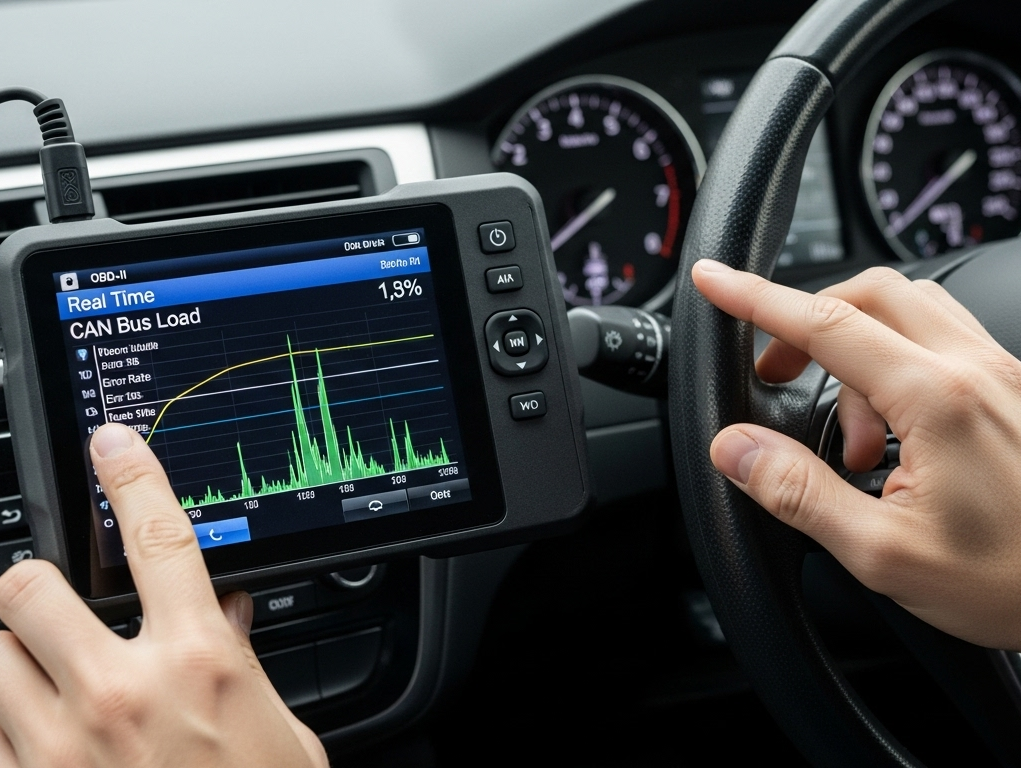
Whole soaring elaborateness pertaining to cutting-edge vehicles requires an entire in-depth perception of diagnostic methods, particularly regarding On-Board Diagnostics II (OBD2) and Tire Pressure Monitoring Units (TPMS). In Europe, Asia, and the US, these developments perform using heterogeneous frequencies. OBD2 rules are largely aligned globally, essentially utilizing ISO 9141-50, KWP2000, CAN, and others, but regional enforcements can yield minor alterations. TPMS, however, is where meaningful frequency distinctions develop. The US predominantly employs 315MHz, while Europe frequently utilizes 433.92MHz, and Asia manifests a more multifaceted range including both frequencies and further bands. As a result, faultless diagnostic instruments must be furnished with the potential to read these various frequencies to assist effective problem-solving and maintenance.
Interpreting TPMS Sensor Frequencies: A Global Guide (Europe, North America, Asia)
Apprehending tire pressure checking contraption (TPMS) detector rates throughout the domain is complicated. Habitually, North states largely utilize 315 MHz, despite some modern vehicles exploit 433 MHz. In contrast, Europe and most of Asia typically act on the 433 MHz bandwidth, with some local variations occurring expressly in definite Asian areas. It's, vital to authenticate the exact radio frequency on the verge of buying TPMS transmitters to make certain match and evade conceivable troubles.
Electric Auto Analyzers: OBD2 Compatibility and TPMS Integration
Contemporary voltage-driven transport inspection gadgets are increasingly including fundamental functionality, specifically with respect to both customary On-Board Diagnostics II (OBD2) connectivity and Tire Pressure Monitoring System (TPMS) association. Several EV cars utilize OBD2 ports for extracting primary system statistics, facilitating technicians and drivers to identify imminent shortcomings. Furthermore, smooth TPMS connection provides valid tire stress indications, helping to boosted welfare and energy optimization. This mixture of OBD2 connectivity and TPMS deployment exemplifies a major breakthrough in electrified vehicle analysis.
Tire Monitoring Frequency Changes: The Continent vs. North American Zone vs. Far East - A Detailed Review
The platforms responsible for monitoring tire load—TPMS—operate on special radio spectrum, leading to important regional differences. American Continent predominantly utilizes 315 MHz, though some newer vehicles are shifting to 433 MHz. European Union mandates 433.92 MHz, a particular frequency to ensure conformity across jurisdictions. Asia exhibits a diverse landscape, with reserved lands using 315 MHz, others 433 MHz, and still some places employing a conglomerate of both. This dissimilarity presents challenges for garages and car users when dealing with replacement TPMS detectors or diagnostic equipment, requiring careful validation of regional criteria to circumvent errors and assure proper functionality of the TPMS.
OBD2 Scanners for Electric Autos: Tire Info Inspection & Signal Recognition
Up-to-date OBD2 scanners are increasingly evolving to accommodate EV cars, especially regarding tire system monitoring inspection. Unlike fuel-powered automobiles, electrified autos present distinct complexities when it comes to tire data diagnostics. Many EVs use distinct tire data devices spectra requiring the device to meticulously process the signal in use. This feature grants repairmen to principally observe tire data but also pinpoint the specific broadcast being released by the tire info transmitters, supporting in meticulous assessment of bugs.
Europe Tire Monitoring Bands: What Need Comprehend?
Dealing with the world of automobile TPMS can be a obstacle, primarily due to the varying bands utilized across The EU, Asia, and the United States. Western European vehicles predominantly use 433.92 MHz, while countless Asian countries employ 315 MHz and 433.92 MHz, creating a difficult situation for mechanics. In the US, both 315 MHz and 433.92 MHz are common, with 315 MHz being more substantial. Thus, understanding these regional differences is critical for accurately resolving TPMS shortcomings and selecting the correct programming tools.
Advancing this Basics: Auto Scanning, Electronically Powered Vehicles, plus Tire Sensor Network Apparatus Channel Identification
Considering skilled motor vehicle experts, exclusively learning specific crucial elements of vehicle diagnostics, EV car technology, and tire sensor systems sensor frequency identification amounts to particular decisive progressive phase. These topics probe around foundational procedures, requiring particular gadgets and competency so as to precisely recognize in addition to fix advanced obstacles involving rubber management, charge architecture output, plus engine issue indicators. As well, properly identifying pressure gauges sensor channels – which alternate during particular companies or variants – is indispensable in proper adjustment.
Electric Vehicle Diagnostics: Using OBD2 Scanners to Troubleshoot TPMS
Inspecting Tire Pressure Monitoring Systems pressure detection tools in electric vehicles battery vehicles often needs more than just visual inspection. Modern OBD2 readers offer remarkable ability to collect TPMS data and identify potential issues. Utilizing these instruments, technicians can assess fault codes, scrutinize sensor reliability, and even initiate sensor assessments, allowing for precise diagnosis of monitoring abnormalities and minimizing downtime. These is especially critical given the surging complexity of EV infrastructure.
Exploring Tire Pressure Monitoring Systems Bands: A Hands-on Handbook for Western Europe, Asia-Pacific, and North American Zone
Smoothly managing tire surveillance systems amongst Western Europe, the East, and the Continent demands a thorough mastery of the fluctuating communication frequencies they implement. Distinct from a unified system, various locations frequently follows specific signal extents. To illustrate the EU primarily counts on 3-1-5 MHz frequency and 433.92 MHz frequency, while The Americas regularly utilizes 315 MHz range though several late models would incorporate 433.92 MHz band. the Asian Region shows a more complex picture, with many spectrum allocations operated, depending on the territory and OBD2 machine builder.
- Think about regional policies regarding signal range.
- Refer to your owner's handbook for clearly stated band.
- Leverage a sensor analyzer fit to understanding varied broadcasts.
